Kranji Young Farmers’ Strive to Keep Farming Going

We are extremely heartened to see the young farmers in Kranji stand up and promote the farming business in Singapore. Farming ought to be an indispensable industry, and it pleases us that young Singaporeans see its significance.

We still have to find ways to feed ourselves so that we are not at the mercy of other countries

Just as volunteer Darren Ho puts it in another CNA report, “As much as we can rely a lot on other countries, we still have to find ways to feed ourselves so that we are not at the mercy of other countries.”

We are also happy to see children of our own farmers actively promote their family business and raise awareness on the farming issue:

So what if it’s a mere Facebook share? Every bit counts!

Here’s the text of the post, in case you can’t read it:

“Hi Friends,

As many of you know, my father owns a fish farm (yes that makes him a farmer). While I yet to have plans on taking over the farming business, I would just like to share the experiences I’ve had, never having known any other way of living than living on a farm.

Some of you may have seen the episode on CNA, On the Red Dot Unique Communities – Farmers and Friends, where our friend from Jurong Frog Farm shared what growing up in the “countryside” was like, and my experience is similar. Like her, I hated living here as a teenager because it is so difficult to get around, even to school. But living here also has its perks – I grew up in a small and tight community of Farmers, where everybody knew everybody, and kept a lookout for one another. Plus, I got to run around on the farms, and get free goat milk from Hay Dairies Pure Goat Milk and food, just as Chelsea did.

Every weekend of my childhood was also filled with great learning opportunities. I’d watch the fish being fed, help my mom as a cashier, learn how to take orders on the phone, and every other weekend, my dad would bring my cousins, siblings and I to other farms, where we watched other things grow. When I got older, I learned how to manage events and how to interact with the different different people who were involved in farming or were interested in it one way or another.

But the most important thing I’ve seen and learned through the many years of running about, is how hard my father and his friends work to bring food to our table. Not just to feed my family, but many of yours too.

You may not think it is true, because over 90% of the food stuff you see in Fairprice are not locally produced. The vegetables you eat were probably grown in China, and the eggs were probably from Malaysia. But we are real, and we exist. Our Farmers work hard, but we are too small a community to feed every single one of you. And from June 2017 onwards, we will become even smaller, and many of our Farmers will cease to exist as Farmers.

It also saddens me that pretty much none of our children will ever get to experience living on a farm in Singapore and grow up the way Chelsea, my siblings and I did.

While there is nothing much I can do about the Government’s decision, I just thought I’d say this – Defence and security are important. But war need not be military. It could well be trade, and where will we place the importance of food and survival when it happens?

There is hardly anything anyone can do, but I thought I should say something, so that you would, at the very least, know. 62 farms will not have their leases renewed from June next year. There are still some farms left, but our lease are due end 2017 and nobody knows what will happen. We couldn’t stop what already happened, but hopefully, we can prevent further scale-back in future.”

Defence and security are important. But war need not be military. It could well be trade, and where will we place the importance of food and survival when it happens?

Read the article about what our young Kranji farmers have been doing here:

http://www.channelnewsasia.com/news/singapore/kranji-s-young-farmers/2824602.html

Keep the movement going! 🙂
Keep Farming Alive

Channel News Asia recently wrote an article about the uncertainties that local farmers currently face, following an episode of On the Red Dot which interviewed one of our youngest farmers, Chelsea Wan, from Jurong Frog Farm.

As Singapore’s Government cease to renew land leases for 62 farms starting June 2017, many farmers have to find their businesses a new home.

In most societies, farming is one of the most important industry, as it feeds a population. However, in land-scarce Singapore, where over 90% of our food are imported from other countries, it appears that farming is a neglected industry – the Government time and again reclaim farming land to make space for development and military training.

While the Government has set aside some land for farms to tender for, finding a new home for vegetables, goats and fishes is nowhere as easy as it seems. A huge amount of funds have to be re-invested onto a new plot of land, and it is simply asking an established business to start from scratch, all over again. In fact, building new infrastructure for farming will cost at least one million, and many years of planning and execution. By the time a newly built farm is ready to jump into action and prepare for its first harvest, it would be more than halfway through the new land lease. Moreover, the new plots of land may not be as suitable for farming – not all soil grows vegetables, and not all earth makes good ponds.

Hence, asking a farm to move, in every way contradicts the purpose of farming — to provide our population with affordable, even cheap, and healthy food grown in a sustainable way.

Even though Khaiseng Fish Farm remains unaffected this round, we are extremely concerned about the ceasing of lease renewal for the 62 farms in our neighbourhood. Not only has it forced many of our beloved neighbours and friends out of business, it completely undermines the importance of farming.

While making space for our defence forces to train and for new homes to be built is important, we must not neglect the importance of farming. Ensuring that a country produces food on its own is as important as bringing food home to the table for your family.

As we doubt that the decision can be undone, we hope to raise some awareness on the importance of farming in Singapore.

Please share this post and spread the word!

The complete URL of the CNA report: http://www.channelnewsasia.com/news/singapore/unanswered-questions/2823076.html

CNA’s On the Red Dot – Unique Communities – Farmers and Friends: http://video.toggle.sg/en/series/on-the-red-dot-2016/ep8/405572


Why You Should Support Local Farms

This definitely isn’t the first time you’ve heard calls of encouragement to support local farms by purchasing local produce. But why should you? Over 90% of the food you see in supermarkets are imported anyway!

Well, here are eight very good reasons for you to keep an extra lookout for food made in Singapore and support local farms like ours:

1 . It is fresher – 

Local produce are definitely much fresher than imported produce. Especially fish or seafood products. Local fish products arrive fresh – live, if you wish – while imported food fish, more often than not, arrive poorly chilled or frozen. Upon harvest, local farm products are immediately cleaned, packed, and delivered to places near you. At our farm, harvesting to delivering takes way lesser than 24 hours! The fish products you receive is undoubtedly the freshest you can receive.

2 . Reduce your carbon footprint –

Food grown in Singapore travels way lesser than food grown outside of Singapore. From our farm in the North-West to your home or restaurant in the South-East, it only takes an hour by car, as compared to food from our neighbours which travel long, energy-consuming distances before making its way into your stomach.

3 . Connect with your community –

Local farms attract local communities. In case you do not already know, a local farmers’ market takes place every quarter in Kranji (read more about it here), where you can purchase the freshest local produce ever. Moreover, Community Clubs (CC) and Residents’ Committees (RC) often organise day trips to local farms. Make new friends with others who reside in your community and bond with your family through these meaningful farm tours!

4 . It is sustainable –

Singaporeans back us up, buy our products, we use Singaporeans’ money to grow more and better food for Singaporeans. With the never-ending cycle of positivity, we will never run out of quality food for Singaporeans. We will grow and produce for as long as you support our farming business.

5 . Another kind of sustainability –

Local farms such as ours employ sustainable farming methods. We grow food without harming the environment. We ensure we tap on as little natural resources we can. We make sure we are able to produce ample food for you, without tipping the balance of the ecosystem. Last month, we wrote an article about Sustainable Farming here.

6 . Talk about Food Security –

We all know our 5 pillars of Total Defence, but there is one very important aspect we ought to defend ourselves in – our food. With more than 90 percent of our food being imported from other countries, we are much more vulnerable than we think. What will happen if our neighbours run out of food for themselves? Will they still feed us? Moreover, our neighbours’ farming costs are not within our control, making us vulnerable to fluctuations in food prices as well. Only through backing Singaporean farms and purchasing local food produce can we defend ourselves against the unforeseen circumstances of food supplies.

7 . You know where your food really comes from –

One good thing about eating food that were grown in Singapore, is that you can actually see it happen. Most farms in Singapore are open to public, and you can visit to take a look at how your food is grown and produced. See for yourself what really goes into your stomach. This is something you can’t do with food imported from another country.

8 . Food Safety –

Local farms like ours are mostly AVA-licensed. The Agri-food and Veterinary Authority (AVA) of Singapore monitors every single step taken in the farming process. From breeding to processing, AVA ensures that local farms are prudent to ensure consumer safety. This is especially so at Khaiseng Fish Farm – we are the only fish farm in Singapore to have obtained  2 of the most stringent licenses which AVA issues, one for farming and one for processing live goods on our farm. The fish from our farm can’t be more safe for your consumption.

Seems like supporting local farms only brings about benefits. Why then do you still purchase imported food? Support Singaporean farmers and their products today!

Fresh Fish Recipe! (Steamed Patin Fish)

Fish is high in Omega-3, and eating fish brings about lots of health benefits! However, the method of cooking fish is very important. While deep fried fish and chips make your taste buds feel good, the amount of oil and cholesterol in one serving over-weighs the little health benefits from the frozen fish meat.

The best way to retain all the healthy fats from fish while pleasing your taste buds would be to steam it. But also be sure to use the freshest fish that can be found in Singapore to ensure the best nutrients are retained! You can find the freshest fish products on our farm 🙂

We breed the freshest fish from the region, such as the popular Patin fish often found in Chinese restuarants all over Singapore.

Patin is also extremely rich in Omega-3! Here’s a recipe how to prepare delicious, fresh, steamed Patin!

Ingredients:
1 FRESH Patin fish from our fish farm!
1 tbsp Oyster Sauce
1 tbsp Light Sauce (Soy Sauce)
2 cloves Chopped Garlic
2 cm Ginger
1 tbsp Sesame Oil
Some celery
Some lettuce leaves

Method:
1. Rub some salt over the cleaned and cut fish and steam it for 7 minutes.
2. Clean and slice ginger into strips. To prepare the sauce, heat up a wok and put in some sesame oil. When it is hot, fry some sliced ginger and chopped garlic till aromatic.
3. Pour the fried ingredients over the steamed fish. Garnish with some celery and lettuce leaves on top of the fish.
4.Serve hot with rice.

2012-01-26 20.27.59

(recipe courtesy of: http://asianfoodandrecipes.blogspot.sg/)

Happy Lunar New Year – 新年快乐!

It will be the Lunar New Year in just a week’s time!

Have you got seafood prepared for your steamboat reunion dinner? 🙂

Fret not – we are open the noon of New Year’s Eve (6 Feb)!

This Lunar New Year, we are making a wide range of seafood available, from freshwater Tilapia, to Grouper, Sea Bass, and Tiger Prawns!

Definitely the freshest seafood you will find in Singapore.

Hurry down while fishes swim! 😉

Singapore Farmers – Featuring Khaiseng Fish Farm

Last year, in celebration of our nation’s 50th birthday, our dear friend Ore Huiying participated in the Singapore Memory Project and made a few short documentaries featuring local farmers and their farms.

Our farm was one of the featured farms! 🙂
Check out how our boss, Mr. Teo Khai Seng founded our farm, the challenges we face, and our aspirations for the future here:

https://youtu.be/wtoZFCOY-TM

Also, take a look at Huiying’s project here:
http://singaporefarmers.com

Sustainable Fish Farming

Apart from our aim to supply the Singaporean community with the freshest fish products, we also aim to achieve so by using sustainable fish farming methods.

But first, what is sustainability? Why is it so frequently emphasised, and why is it important in farming?

Sustainability

In ecology terms, sustainability is most often defined as the capacity to endure. It is how biological systems remain diverse and productive indefinitely. More broadly, it is the endurance of systems and processes.

Living in a world of limited resources, especially in Singapore where there are no natural resources of our own to speak of, sustainability is exceptionally important.

In farming, sustainability plays a role in ensuring that farming products are produced without sacrificing or hurting the environment, consumers’ health, the community and animal welfare.

How is Khaiseng Fish Farm a Sustainable Farm?

A key challenge in which many fish farms operating on land face is water; both obtaining water for farming purposes and disposal of used water are problems which have to be handled with care.

Over the years, Khaiseng Fish Farm has developed our own techniques to overcome these challenges — we have developed our very own water catchment system and have our own reservoir, which stores rainwater for use in dry weather, to ensure that water supply is ample all year round on our farm.

With the help of the AVA Food Fund, we have also developed and built a unique water system which allows used water in our fish ponds to be filtered and recycled. This system has allowed us to  reduce the need to change waters, a process which puts tonnes of water to waste every year.

IMAG1143
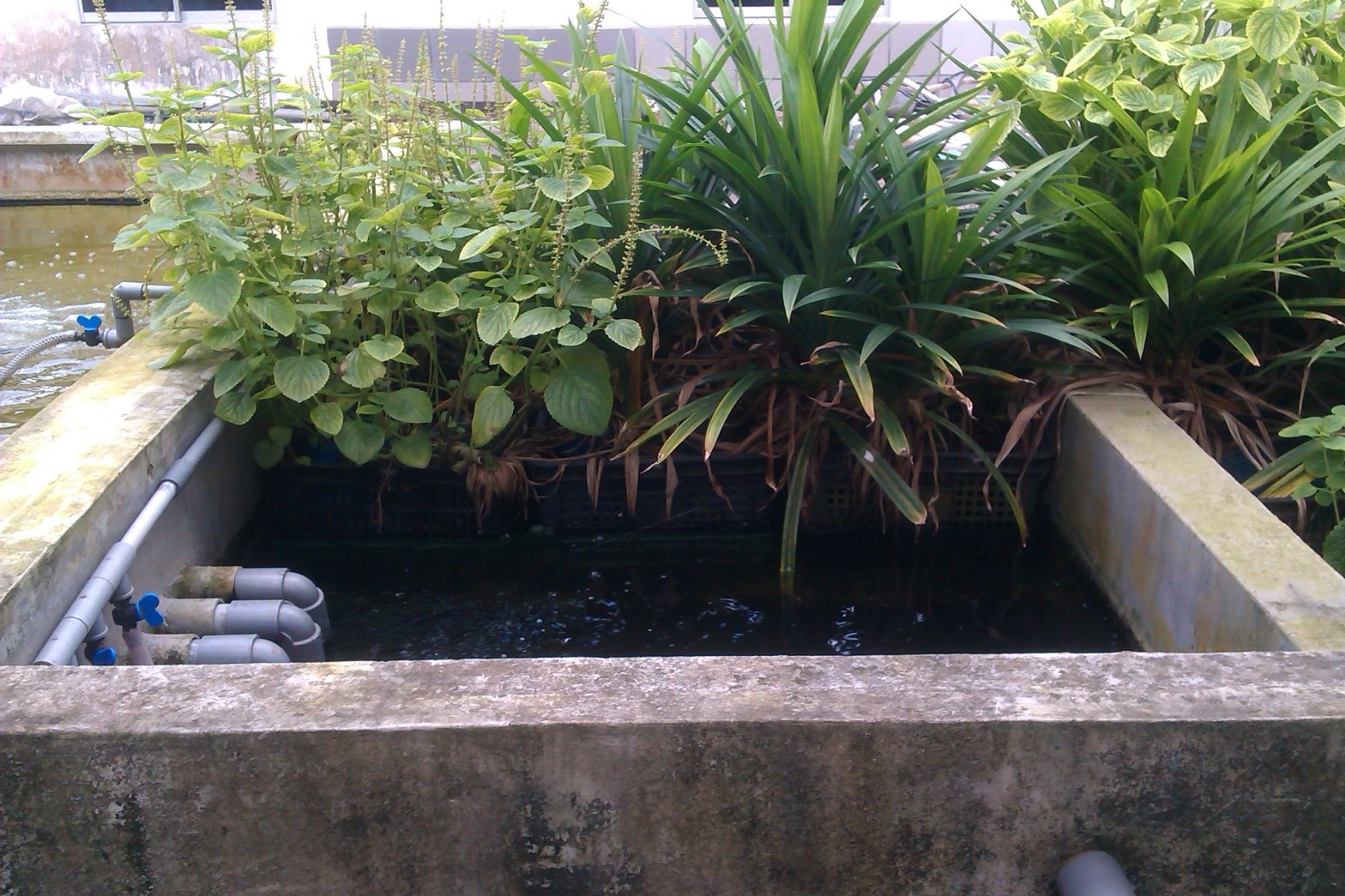
A built-in filter system in our one of our smaller storage tanks.
IMAG1142.jpg
We make full use of it! Plants are being grown atop our filter tanks, using the fishes’ waste as fertilisers 🙂

Why are all these important?

Being a sustainable farm is important to us as it means being able to produce fresh food fish for your consumption at the lowest possible costs all year round, while protecting our environment.

Support our business by visiting our farm today!

Welcome

Established in 1997, Khaiseng Trading & Fish Farm aims to provide fresh food fish to Singaporeans through sustainable farming methods.

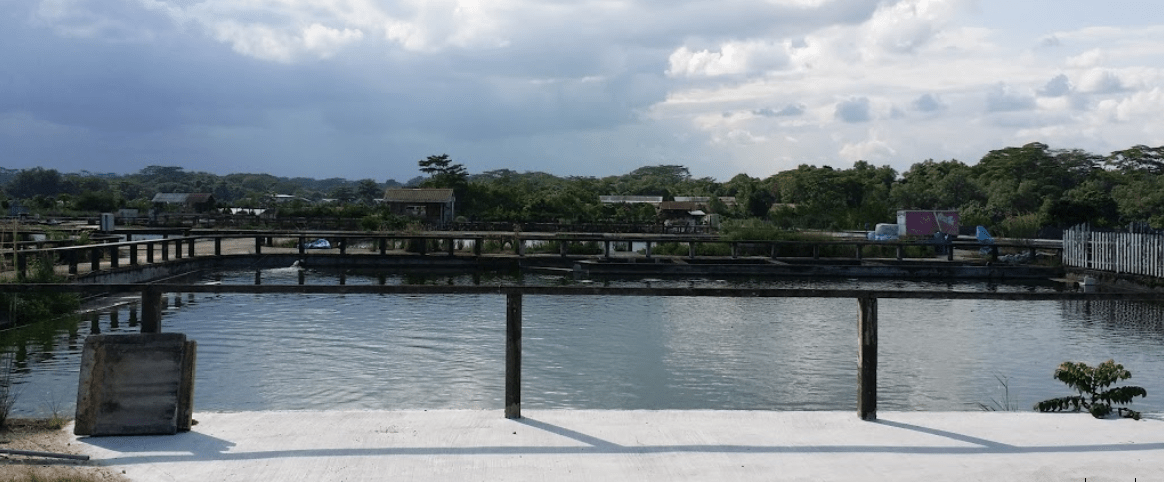
With more than 30 fish ponds on a 3.8 Acres farm located near Lim Chu Kang, Khaiseng Trading & Fish Farm rears freshwater fishes such as Patin (Pangasius) and Catfish.

Apart from rearing freshwater fish, Khaiseng Fish Farm also imports live products such as Toman (Snakehead), Bullfrog, and freshwater Eel from Malaysia and Taiwan. Seawater products such as Grouper, Tiger Prawns and Sea Bass are also available based on seasonal demands.

 Both Walk-in and Delivery services (only for wholesale) are available.

Khaiseng Trading & Fish Farm is licensed by the Agri-food and Veterinary Authority (AVA) of Singapore.

For enquiries, please contact us.